
Midlife Belly Fat: What Is Going On?!
Doing everything right…but STILL gaining weight?
Why does losing weight—**especially BELLY FAT—**get so much harder in midlife?!!?
If you’re eating the same way, exercising like you always have, and suddenly noticing your waistline expanding,
you’re NOT imagining things!
During the menopause transition, declining estrogen levels can change your mood and motivation, hunger and satiety, muscle preservation and even how your body distributes fat,
making it more likely to accumulate around your middle. 😖
In fact, women often experience an increase in deeper abdominal (visceral) fat,
even without a dramatic change on the scale.
But here’s something you may not realize:
👉 Menopause itself isn’t necessarily the primary driver of weight gain.
And even though your hormones are changing, your body composition is still well within your control.
The key to fat loss in midlife is to clearly understand the major contributing factors:
✨ fitness, nutrition, sleep, and stress.
Let’s get started!
Why This Matters
Belly fat, in particular, matters more than just about how your jeans fit. Visceral fat, the fat stored deep around your internal organs in your abdomen, is associated with increased risks of heart disease, type 2 diabetes, and even cognitive decline. So, managing your weight isn’t about simply having a smaller waistline—it’s ensuring you’re healthy and disease-free for as long as possible.
FITNESS SIMPLIFIED
One of the most overlooked contributors to midlife weight gain? Moving LESS than you use to!
Fitness Tip to Manage Midlife Weight
Move Every Day
Studies have shown that overall physical activity levels gradually (and imperceptibly!) decline during perimenopause and into the post-menopause years.
Here’s what often happens:
…Life gets really busy, your mood shifts, aches and injuries interrupt routines, and before you know it,
you’re exercising twice a week instead of four times.
That gradual decline in activity can contribute to both weight gain and muscle loss—making weight management even harder.
So, to reverse this the answer IS NOT simply MORE CARDIO!
Daily movement matters, but regular strength training is especially valuable for preserving muscle, supporting metabolism, and improving body composition.
And you don’t need a gym membership or fancy equipment to get started!
Walk, climb stairs, squat, carry groceries, or do a few bodyweight exercises.
Bottom line: Move every day and challenge your muscles regularly.
Not sure where to start? Keep it simple with this 👇 full body beginner strength workout—no equipment needed!
Full Body Beginner Strength Training Workout
- Glute Bridges (10 reps): Push through heels to lift hips up, then slowly lower back down
- Bear Crawl (10 reps): On all fours, lift knees off floor to hover and brace your core. For more challenge try cycling through lifting one limb at a time.
- Bent-Over Ts & Ws (10 reps each): In a low hinged position, squeeze upper back as you pull arms back.
- Side Split Squats (10 reps/side): Legs wide and alternate sitting over and back into one hip at a time, push through thigh to rise back up, squeeze elbows back.
- Single Leg Deadlifts (10 reps/side): Standing knee is bent as you hinge over to touch opposite hand to floor. Use support as needed.
Extra Tip: Set a time for 10 minutes and see how many rounds you can do. Work continuously, taking very minimal breaks—push yourself!
Did You Know...
- Strength + movement make a powerful team! Aim for 2-3 challenging strength workout weekly, with lighter activities like walking on the days between.
- Everyday movement adds up! Walking, cleaning, and taking the stairs all contribute to calorie burn through Non-Exercise Activity Thermogenesis (NEAT).
- Forget the “fat-burning zone”. Strength training helps preserve muscle while losing fat, making it essential for improving body composition.
NUTRITION SIMPLIFIED
Want to manage your weight without constantly counting calories? Focus on what your food GIVES you!
Nutrition Tip to Manage Midlife Weight
Choose Nutrient-Dense Foods
Nutrient-dense foods deliver more vitamins, minerals, PROtein, and fiber relative to their calories.
Think grilled chicken or steak, roasted vegetables, and quinoa versus a meal of creamy pasta and soda.
Both provide calories, but one delivers more nutrients and lasting satisfaction.
Why does this matter?
👉 First, consistently eating more calories than your body needs can lead to fat gain.
👉 Second, meals rich in PROtein, fiber, and whole foods help you feel fuller longer, making it easier to manage your appetite. (Declining estrogen directly impacts your satiety levels, so this is important now more than ever!)
And when you’re well-nourished and energized, staying active feels easier, too! ✨
Eat to NOURISH your body, not just fill your stomach.
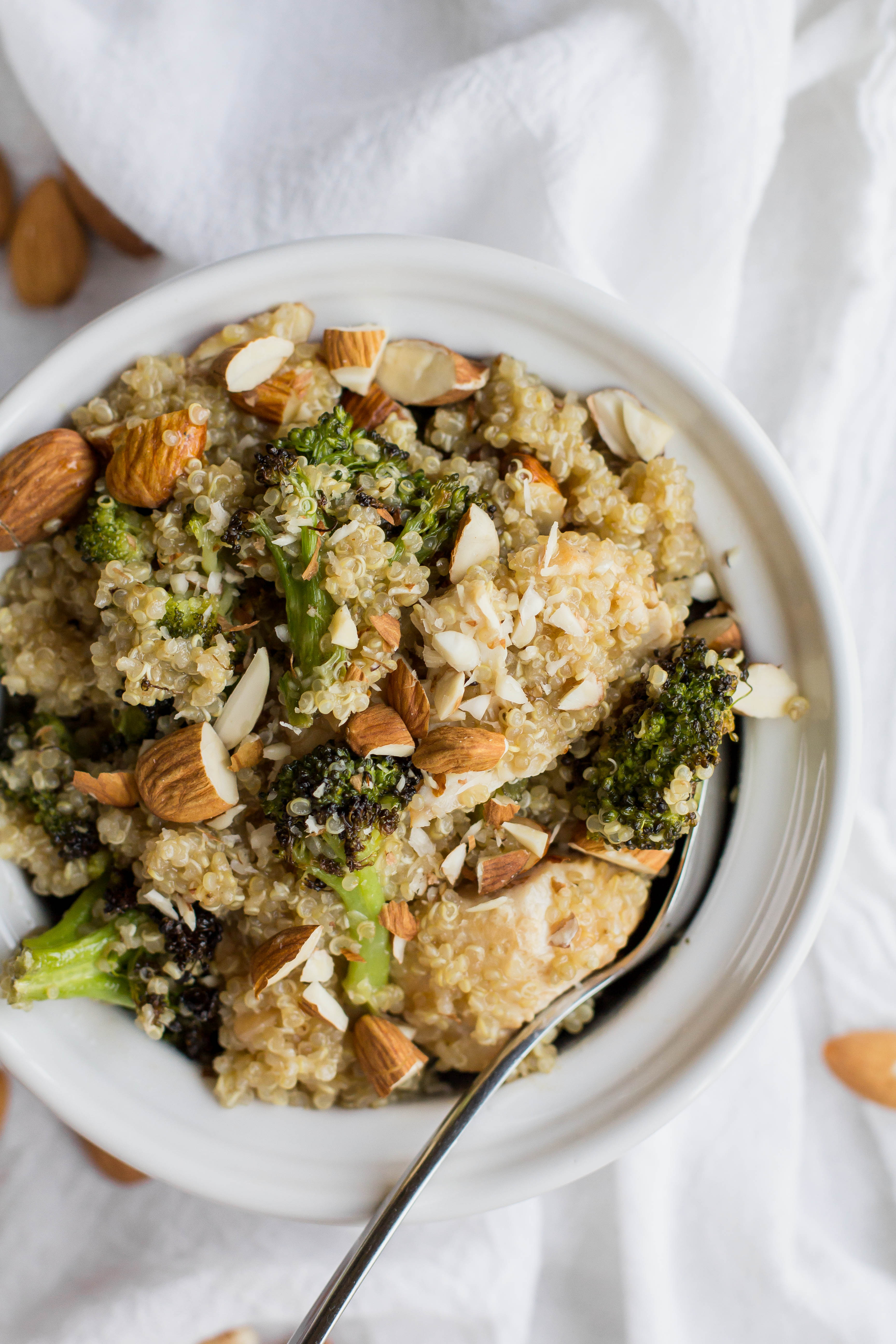
This recipe 👇 is nutrient-dense, without being calorie-dense. Try it today!
Broccoli Quinoa Chicken Salad
More ideas to Prioritize Nutrients
- Eggs scrambled with spinach, mushrooms, peppers, and a sprinkle of feta. Serve with fresh berries for extra fiber and antioxidants.
- Mediterranean beef bowl with grilled meat, cucumber, tomoatoes, spinach, chickpeas, and a dollop of tzatziki. Try my easy & super yummy recipe 👉 Tzatziki Sauce
- Baked sweet potato topped with seasoned lean ground beef or turkey, black beans, salsa, and a spoonful of Greek yogurt.
MINDSET SIMPLIFIED
Yes, it’s possible.
You can feel like you’re doing everything RIGHT with exercise and nutrition, but still feel like your body isnt budging.
Exercise and nutrition are powerful, but they’re only TWO pieces of the midlife weight-management puzzle.
Enduring chronic stress and experiencing poor sleep directly impacts your weight loss efforts!
Both can influence your appetite, energy, cravings, and motivation to move—making fat loss more challenging, even when you’re trying to do everything right.
So instead of pushing yourself harder, consider what your body might need LESS of.
🤳 Log off.
🚶➡️ Take a walk.
🍵 Sip some tea.
🎶 Listen to music.
😤 Breathe deeply.
🧘 And give yourself permission to RELAX.
Make quality sleep and daily stress management a priority—not an afterthought.
Rest isn’t a reward for working hard.
✨ It’s part of taking care of your health!
Mindset Tip to Manage Midlife Weight
Prioritize Rest & Recovery
THE TAKEAWAY
If managing your weight feels harder than it used to, you’re not imagining things—and you’re certainly not alone! Your body is changing, and the answer isn’t necessarily to work HARDER or eat LESS, but to build habits that work WITH those changes, not against them. Small, consistent choices across all areas of your health can make a BIG difference over time!
- Move Every Day
- Choose Nutrient-Dense Foods
- Prioritize Rest & Recovery
ADDITIONAL RESOURCES
Self Care Simplified podcast
SELF CARE SIMPLIFIED PODCAST EP 195. How to Exercise When You Literally Don’t Have Time or Energy - 4 Simple Tips
SELF CARE SIMPLIFIED PODCAST EP 324. Menopausal Belly Fat & Why It’s Killing You
SELF CARE SIMPLIFIED PODCAST EP No. 262. Tips + Tricks for Staying Consistent with Exercise (and Nutrition!)
SPECIAL RESOURCE
Looking for a routine that works your full body in just 15 minutes? Try this one! 👇 Just grab ONE dumbbell and join me for one of my favorite strength training workouts.
15-Minute Full Body Strength Workout | Just One Dumbbell
Until next week... Be strong
